Peptide Testing: Hplc & Mass Spec Purity Guide Pinnacle
How To Review A Peptide Purity Examination: Hplc, Mass Spectrometry And Coa Interpretation For Uk Scientists 2026
Reputable peptide suppliers always note their items in this manner and supply high quality reports with HPLC and MS information to support the pureness degree. As long as you get peptides from a trusted resource that gives a total certification of analysis, you can be positive in the peptide's purity grade and use range. Peptides are evaluated through a mix of strategies, consisting of HPLC for purity, mass spectrometry (MS) for series verification, and nuclear magnetic vibration (NMR) for architectural evaluation. These methods aid identify the peptide's composition, confirm the molecular weight, and discover any kind of architectural alterations or impurities, making certain the peptide fulfills top quality and spec needs. With our thorough peptide analysis platform, Creative Proteomics has established a very sensitive and specific platform.
A useful assay gauging downstream signaling-- or an architectural research using NMR or X-ray crystallography-- demands the greatest purity available. Crystallographers in particular typically call for ≥ 98% pureness due to the fact that even minor contaminants can prevent crystal development or present problem into the crystal latticework. As molecules exit the column, they travel through a detector-- generally a UV detector set to 214 or 220 nm, wavelengths where the peptide bond takes in light highly. The detector records just how much UV light is absorbed in time, creating a graph called a chromatogram. This guide breaks down what pureness really indicates in peptide chemistry, just how it's measured, what the impurities are, and exactly how to read the paperwork that shows a peptide is what it asserts to be.- The trick is understanding what degree of pureness is sufficient for your requirements and exactly how purity is established in the first place.
- For a 10-residue peptide with 99.5% coupling efficiency, you 'd anticipate about 95% of the final product to be the unabridged series prior to filtration.
- The software attracts boundaries around each peak and calculates the area underneath.
- An accredited laboratory complies with rigorous guidelines for test accuracy and technique recognition.
- With our comprehensive peptide evaluation system, Imaginative Proteomics has developed a highly delicate and specialized platform.
What Do Pureness Levels 95%, 98%, 99% Mean?
These are important in the appropriate setting, but they must be interpreted as method-specific proof rather than a global replacement for HPLC and MS. Yet peptide purity is arguably the single most important quality statistics for any type of research peptide. It straight affects the reliability and reproducibility of speculative outcomes. A peptide detailed at 75% purity and one at 99% purity aren't just various grades-- they can produce meaningfully various results in the same assay.What Hplc Can Not Verify Alone
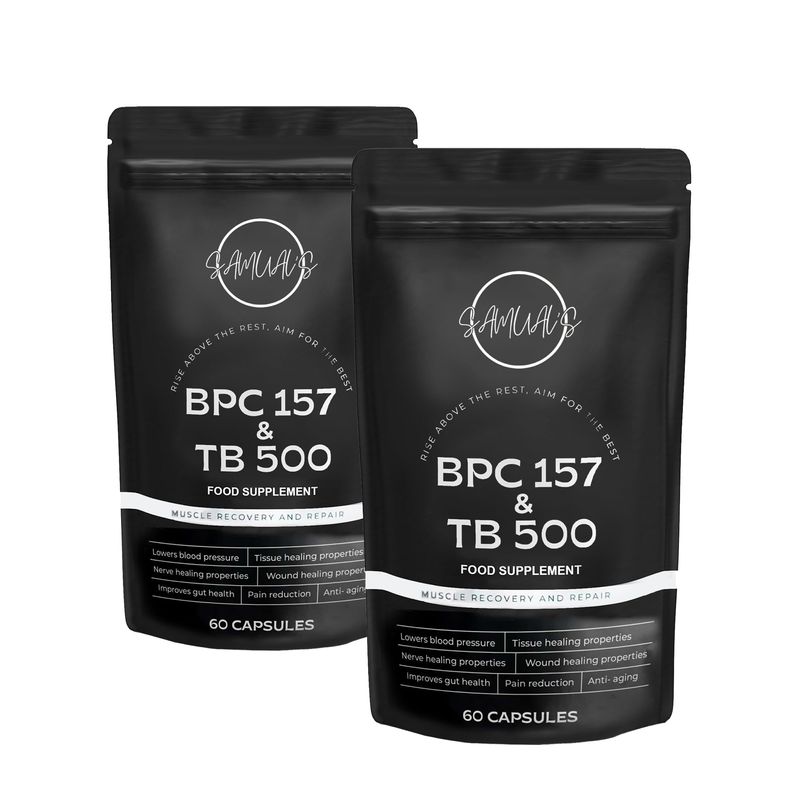
Along with HPLC and MS, specialized laboratories may use orthogonal strategies for included accuracy. For instance, capillary electrophoresis can be utilized to separate really hydrophilic peptides or to verify outcomes, and MALDI-TOF mass spectrometry can assist in mapping bigger or changed peptides. Many peptide manufacturers or suppliers will offer a COA (Certification of Evaluation), for instance our bpc 157 tb 500 mix, that consists of the pureness percent by HPLC and identity verification by MS for every set. Top-tier labs often report peptide pureness well above 95%, frequently ≥ 98-99%, by utilizing state-of-the-art HPLC and MS evaluations. They also examine both resources and finished peptide vials, which assists capture any type of contaminations, destruction items, or formula inconsistencies. 
Relied on labs employ proven screening methods to evaluate peptide examples and validate their pureness and chemical structure. One core approach is High-Performance Fluid Chromatography (HPLC), the gold requirement for examining peptide purity. HPLC separates peptide mixes and can identify even small contaminations below 1% of the sample [4] A common lab will certainly run the peptide via an HPLC system and generate a chromatogram-- the primary optimal represents the target peptide, and any kind of added heights show various other compounds. The purity is then quantified as the percent of the main peak location versus overall locations, giving an exact step of just how pure the peptide is [2]
While peptide purity isn't the only aspect, using badly defined reagents is a recognized factor to irreproducible outcomes. For a 10-residue peptide with 99.5% combining performance, you 'd expect concerning 95% of the end product to be the unabridged series prior to purification. For a 30-residue peptide Visit the website at the exact same effectiveness, that drops to approximately 86%. This is why much longer peptides are harder to create at high pureness and usually cost more. Pureness is the percentage of publications in the shipment that have every web page published appropriately, in the right order, without missing Visit this site out on chapters and no additional web pages stuffed in. A 95% pureness indicates that out of every 100 "books" in your set, 95 are excellent copies and 5 have some sort of mistake. Peptide screening is the set of analytical checks used to review a peptide example prior to it is made use of in a research workflow. In useful COA evaluation, the term typically describes purity testing, identity testing, and documents testimonial. Purity testing asks how much of the found sample is the primary peptide versus related pollutants. Identity screening asks whether the gauged mass or sequence-related proof matches the designated peptide. Documentation evaluation asks whether the record is batch-specific, deducible, and described enough to be audited. Peptide screening is the analytical process utilized to validate that a research peptide is both pure and properly recognized.